Supporting article for the main guide: Local SEO for Indonesian Businesses: Complete 2026 Guide
Many teams jump straight into “optimizing” Google Business Profile or publishing city pages without a baseline. Rankings move, but no one can tell which work created leads. This guide covers a practical local SEO audit: record current visibility, check access and ownership, audit the profile, website, citations, reviews, and tracking, then prioritize fixes. The full strategy lives in the Local SEO guide for Indonesian businesses; profile execution is in how to optimize Google Business Profile, and keyword work is in local SEO keyword research.
Why audit first, then execute
A local SEO audit is not a long report for a shelf. The job is simple: find the biggest constraints before adding more activity. Google says local results depend on relevance, distance, and prominence. If the phone number is wrong, the profile is unverified, or a service page is not indexable, a new blog post is rarely the first fix.
Without a baseline, teams celebrate one ranking win while leads stay flat—or panic about a ranking drop when tracking is broken. The audit ties search signals to business actions.
An eight-step audit that scales
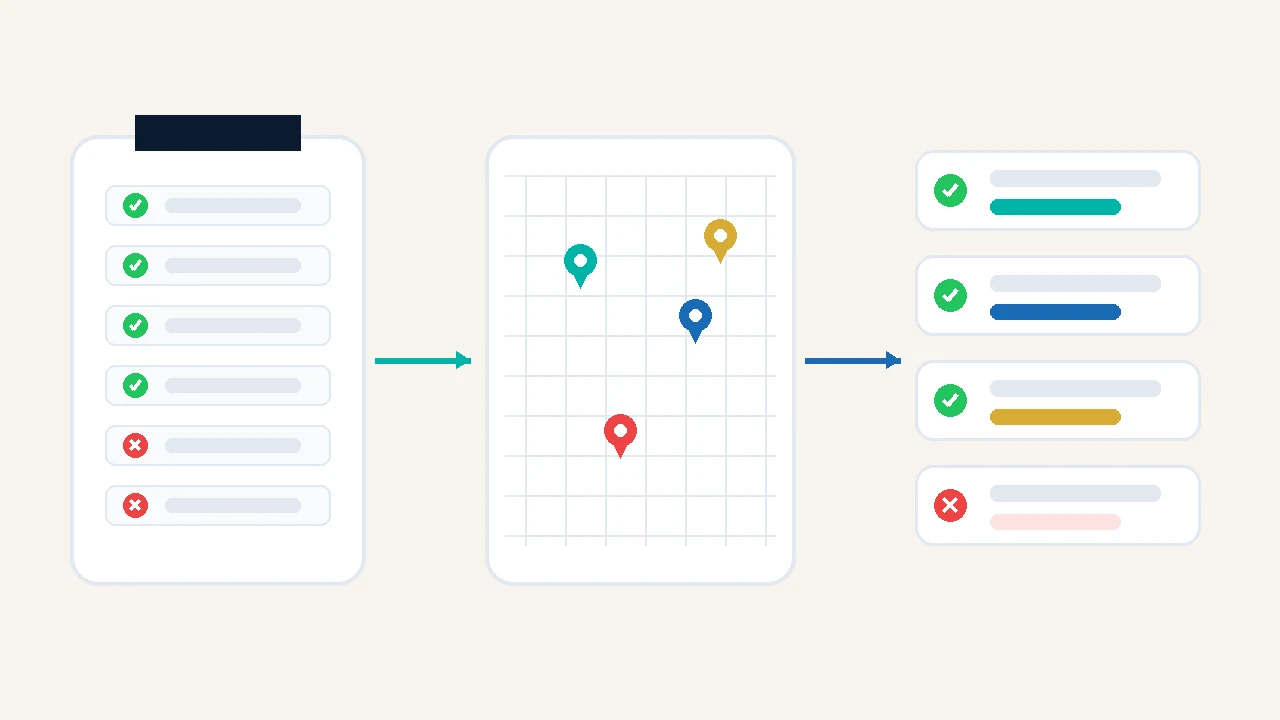
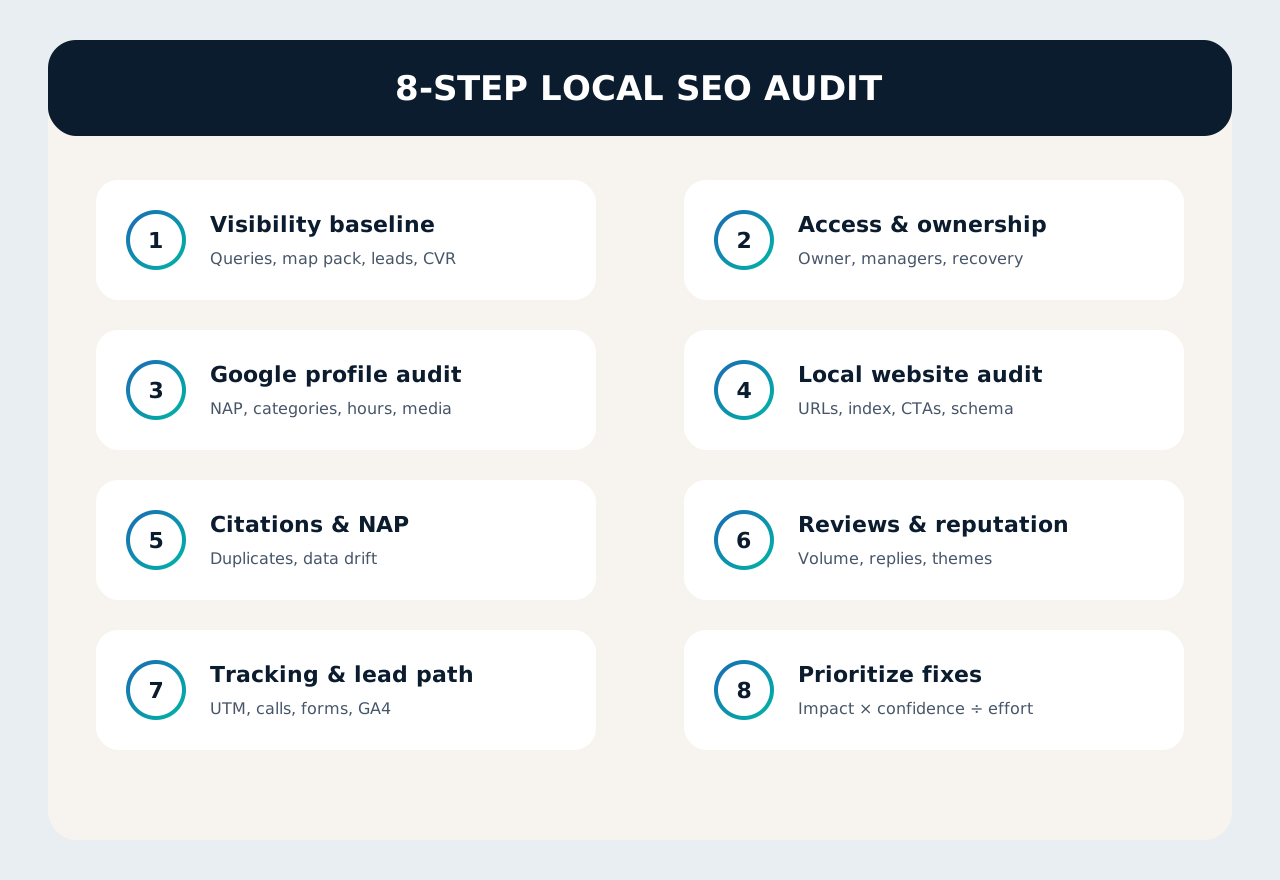
Use this flow for single-location and multi-branch businesses. Each step should produce findings, evidence, an owner, and a priority.
1. Visibility baseline
Collect the last 28–90 days:
- GBP Insights — queries, views, search vs maps, calls, directions, website clicks.
- Search Console — local-relevant queries and pages; compare impressions vs clicks.
- Map pack sample — check 5–10 priority queries from several points in the service area, not only the office.
- Leads & conversion — calls, forms, WhatsApp, bookings; record conversion rate by channel.
Save screenshots and dates. An undated baseline is hard to compare a month later.
2. Access and ownership
A profile without a clear owner is a fragile asset. Log:
- primary owner and active managers;
- recovery email still controlled by the business;
- whether an agency is the only owner (avoid that);
- access to Search Console, Analytics, tag manager, and domain DNS.
If access still lives on a former employee’s phone, stop content work and secure the asset first.
3. Google Business Profile audit
Check the fields Google expects to be accurate and complete: name, categories, address or service area, phone, website, hours, attributes, services, photos/video, products (when relevant), and verification status. Match real signage and operations—not an “SEO version.”
| Check | Common finding | Action |
|---|---|---|
| Verification | Claimed but not verified | Finish verification first |
| Name & categories | Keywords in the name; irrelevant categories | Match the real brand |
| NAP / area | Stale address; oversized service area | Lock operational master data |
| Website | Campaign landing pages that die often | Point to homepage/location page |
| Duplicates | Two listings for one branch | Merge/remove through Google’s process |
Profile execution details: how to optimize Google Business Profile.
4. Local website audit
The site must answer local intent, stay crawlable, and offer a clear contact path.
- Every important service has a clear URL; multi-branch setups need unique location pages.
- Indexability: no accidental noindex, correct canonicals, sensible sitemap and robots.
- NAP on footer/contact/location pages matches GBP.
- Phone, WhatsApp, form, and maps CTAs work cleanly on mobile.
LocalBusinessschema (when appropriate) does not contradict visible data.
5. Citations and NAP consistency
Search brand + city on Google, maps, marketplaces, and industry directories. Log URLs, claim status, and NAP differences. Prioritize platforms customers and partners actually use, not “500 listings.” Full workflow: citations and NAP consistency.
6. Reviews and reputation
Compare volume, rating, recency, themes, and response rate with real local competitors. Check that review requests stay neutral (no incentives/gating) and replies still happen. Ethical workflow: how to get Google reviews ethically.
7. Tracking and lead path
Local SEO without tracking becomes guesswork. Verify:
- UTM on website links from GBP (without breaking the main URL);
- call tracking does not replace public NAP without control;
- form/WhatsApp/call events reach Analytics;
- maps leads vs organic vs ads stay separated in CRM or a sheet.
8. Prioritize fixes
Score each finding with impact × confidence ÷ effort. A common winning order:
- verification / access / wrong phone;
- indexation and critical service/location pages;
- NAP and duplicate profiles;
- review workflow and profile media;
- content and local links.
Do not run 20 projects in parallel. Take the top 3–5 scores, assign owners and 14–30 day deadlines, then re-measure the baseline.
Finding score template
| Finding | Impact 1–5 | Confidence 1–5 | Effort 1–5 | Score |
|---|---|---|---|---|
| GBP phone differs from website | 5 | 5 | 1 | 25 |
| Service page noindexed | 5 | 4 | 2 | 10 |
| Reviews unanswered for 60 days | 3 | 4 | 2 | 6 |
| No city blog posts yet | 2 | 2 | 4 | 1 |
Multi-branch: what to audit per location
- One baseline and one master data record per branch.
- Do not average all cities into one “national” score for local decisions.
- Location pages and GBP website links must match per branch.
- Duplicate listings often appear after address moves—audit address history.
- Review-reply ownership and profile access per branch, with a central SLA.
60-minute checklist (short version)
- Export GBP queries/actions + top GSC pages.
- Screenshot the map pack for 5 priority queries from 2 points.
- Check owner, verification, categories, hours, phone, website.
- Search brand + city for duplicate profiles.
- Open the 3 most important service/location URLs: index, NAP, mobile CTA.
- Log the first 5 inconsistent citations.
- Measure 30-day review response rate.
- Test 1 call + 1 form + 1 WhatsApp path.
- Fill the score sheet and pick the top 5 fixes.
- Schedule a 30-day re-audit.
Audit mistakes that waste the report
- Checking rankings only from the office IP.
- Visual review without owner/manager access.
- Forty recommendations with no priority order.
- Ignoring tracking, then claiming “SEO does not work.”
- Changing 10 GBP fields at once without a baseline.
Conclusion
A good local SEO audit produces an ordered constraint list, not a slide deck of “big opportunities.” Lock the baseline, secure access, clean entity signals (profile, website, NAP, reviews), make leads measurable, then fix the highest scores first. Once the foundation is solid, scale content and authority with the Local SEO guide for Indonesian businesses.
Need a local SEO audit that turns into an execution backlog? See LINC’s SEO services or contact our team.