Supporting article for the main guide: Local SEO for Indonesian Businesses: Complete 2026 Guide
Citations and NAP consistency are local SEO foundations that get skipped too often. When name, address, and phone differ across Google Business Profile, your site, marketplaces, and directories, search engines and customers receive mixed entity signals. This guide covers how to manage citations without chasing hundreds of random listings: lock master data, audit old listings, prioritize platforms, clean duplicates, then keep an update rhythm. The full strategy lives in the Local SEO guide for Indonesian businesses; also keep your Google profile tidy with how to optimize Google Business Profile, and make branch pages follow the location-page guide.
What citations and NAP mean
NAP is Name, Address, Phone—the operational identity customers should see in the same form everywhere they find you. A citation is any mention of that NAP on another platform: Google Business Profile, maps, marketplaces, industry associations, media, or directories.
A citation does not always need to be a backlink. What matters is that the data can be verified, stays relevant, and can be updated when your address or phone changes. Google stresses accurate business information that matches how the business is recognized in the real world—name, address, phone, hours, and website should reflect actual operations. Once primary citations are clean, continue with local link building based on real relationships and cite-worthy assets.
Why inconsistency hurts local SEO
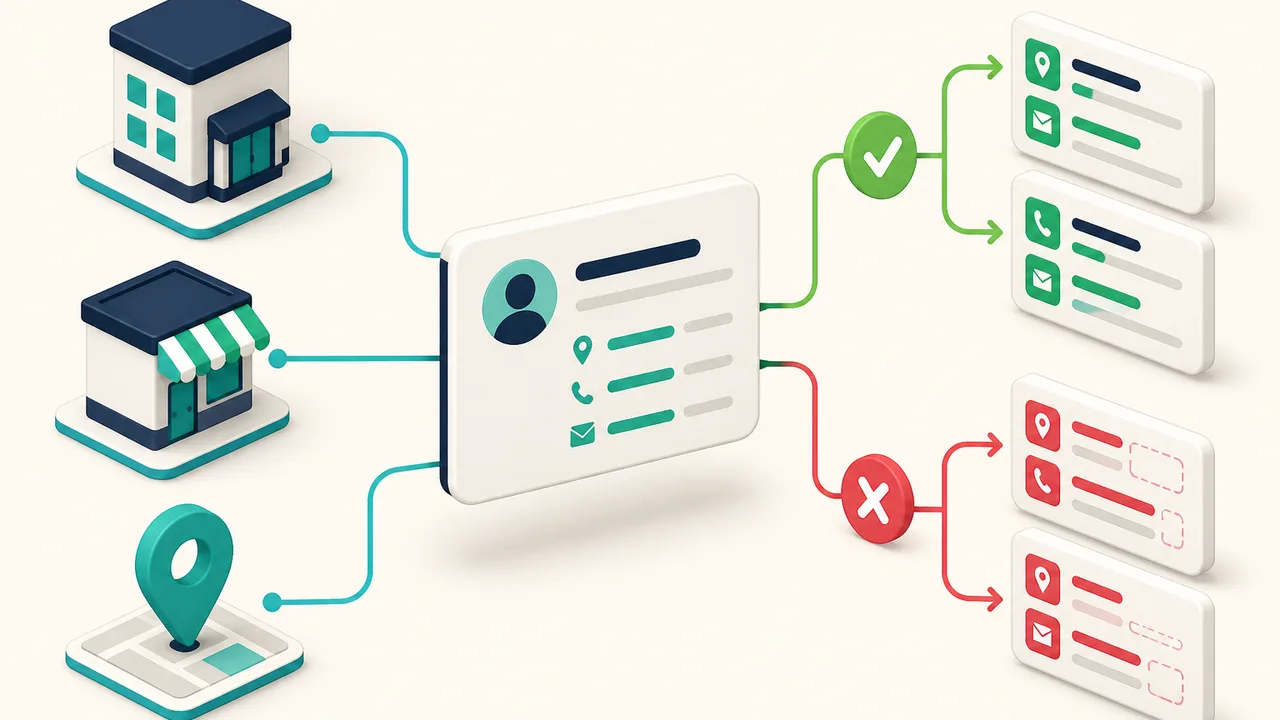
Customers who see different phone numbers on Google Maps and your site footer hesitate. Sales teams lose leads that hit old numbers. For search engines, the business-entity signal weakens: which branch is real, which number is primary, which address is still active.
- Name format drift — “PT LINC Indonesia”, “Linc”, and “LINC ID” with no standard.
- Stale addresses — the office moved, old listings stayed live.
- Layered phones — sales WhatsApp, office line, and tracking numbers mixed with no master.
- Duplicate profiles — two listings for the same branch across platforms.
Lock master data first
Before claiming new listings, lock one official version per branch. Keep it in a spreadsheet or ops document owned by marketing and operations.
| Field | Practical rule | Common mistake |
|---|---|---|
| Name | Match the signage/brand customers actually recognize | Keyword-stuffing the listing name |
| Address | Official format accepted by couriers and maps | Mixing “Jl.”, “Jalan”, and inconsistent RT/RW |
| Phone | One primary number per branch; optional tracking on separate channels | Changing the ads number without updating GBP |
| Website | Homepage or the location page that represents the branch | Linking to campaign landing pages that die often |
| Hours & categories | Match real operations, not SEO wish lists | Irrelevant categories to “show up everywhere” |
A scalable citation workflow
These eight steps cover single-location and multi-branch businesses. Prioritize quality and ownership, not volume.
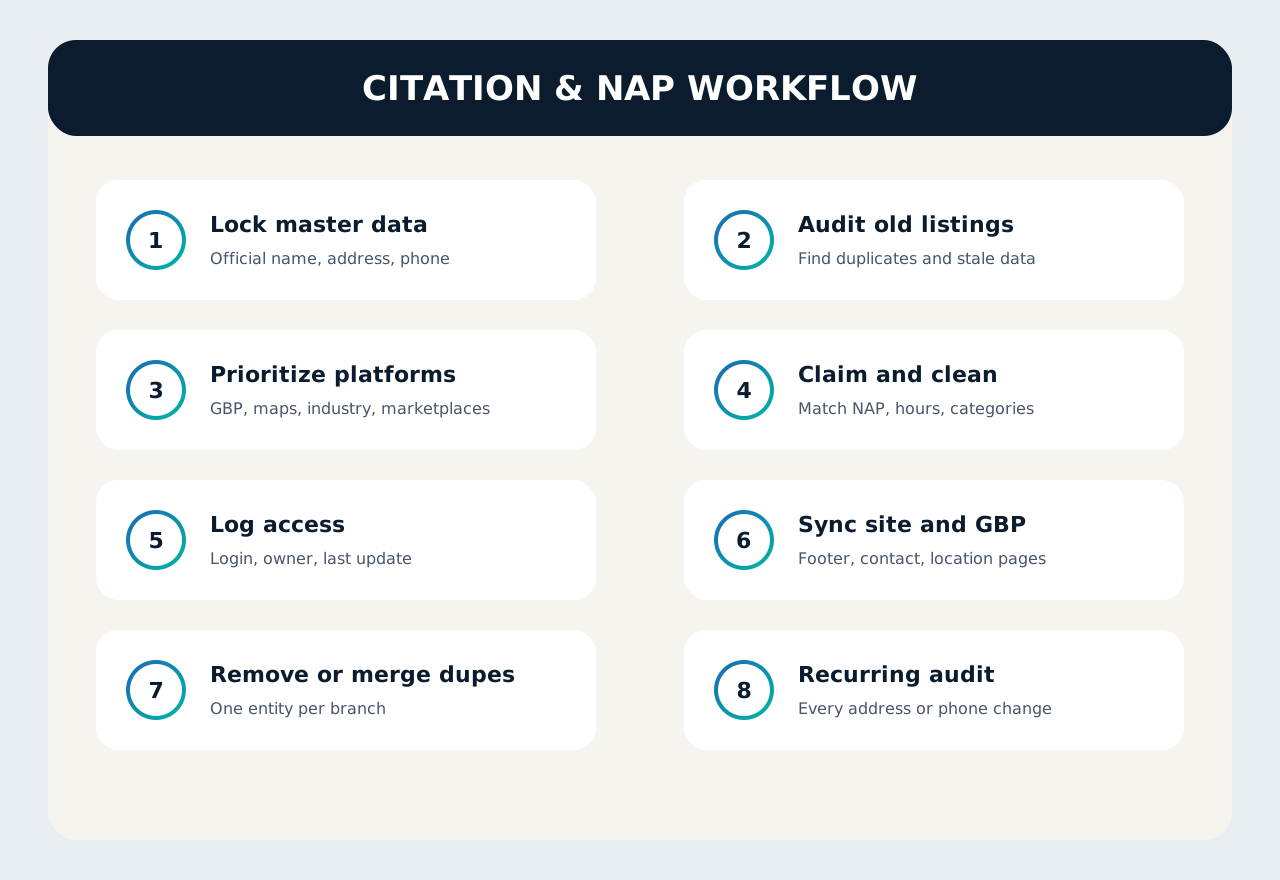
1. Lock master data
Write the official name, address, phone, website, hours, and categories. Get operational sign-off before publishing.
2. Audit old listings
Search brand + city on Google, maps, marketplaces, and industry directories. Log URLs, claim status, and NAP differences.
3. Prioritize platforms
Start with platforms customers and partners actually use: Google Business Profile, maps, relevant marketplaces, industry associations, suppliers, and media that has covered you.
4. Claim and clean
Claim listings you can control. Match NAP, hours, categories, and website. Do not leave half-active listings behind.
5. Log access
Store login, owner, recovery email, and last update date. Citations without an owner decay quietly.
6. Sync site and GBP
Footer, contact page, and location pages should show the same NAP as the Google profile.
7. Remove or merge duplicates
One branch = one entity per platform. Duplicate listings split reviews, photos, and ranking signals.
8. Run recurring audits
Every address move, phone change, or new branch starts with master data, then cascades to every listing.
Which platforms deserve priority in Indonesia
Do not chase “1,000 citations”. Choose platforms that:
- are used by prospective customers in your industry;
- support complete data and allow edits;
- are geographically or vertically relevant;
- have a clear owner on your team.
For many B2B companies, industry associations, partners, suppliers, and local media matter more than generic directories. For local B2C, marketplaces and map platforms customers already use usually matter more.
Multi-branch rules that prevent chaos
Multi-location businesses need strict rules:
- One master record per branch, not one record for every city.
- One primary phone per branch; tracking numbers are logged separately and do not replace public NAP without control.
- Brand name stays consistent; branch labels only when they appear on real signage.
- Website points to the branch location page when that page is ready.
- Closed branches: update or remove listings—no zombie data.
Citation mistakes that hurt most
- Buying “500 citation” spam packages with no relevance.
- Keyword-stuffing the business name on every platform.
- Creating virtual addresses only to rank on maps.
- Updating address in ads and Instagram, but not GBP or the site footer.
- No access log, so old listings cannot be reclaimed.
A 30-minute checklist to start today
- Write the official NAP master data in one document.
- Search brand + city on Google and log the first 10 listings.
- Claim or clean Google Business Profile first.
- Match site footer, contact page, and location pages.
- Choose 5 priority platforms next, not 50.
- Schedule a re-audit every time operational data changes.
Conclusion
Strong citations are not about volume. They are about the same entity being recognized in the right places. Lock master data, clean the listings that matter, remove duplicates, and keep the site and GBP in sync. For the full strategy, return to the Local SEO guide for Indonesian businesses.
Need help cleaning up local SEO foundations, citations, and location-page architecture? See LINC’s SEO services or contact our team.